
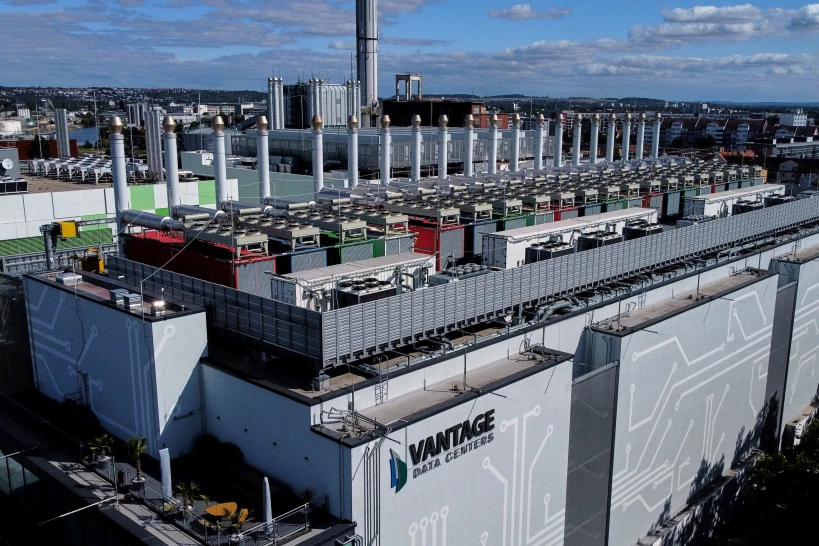
The European Union has announced an ambitious $11.4 billion investment plan to build seven artificial intelligence gigafactories as it seeks to close the growing technology gap with the United States and China. The initiative is designed to significantly increase Europe’s AI computing capacity by creating large-scale facilities equipped with advanced processors, cloud infrastructure, high-speed connectivity, and powerful data centers. EU officials say access to large amounts of computing power has become a strategic priority as artificial intelligence development accelerates worldwide. The European Commission’s plan includes €10 billion in public funding and aims to attract an additional €20 billion in private investment from technology companies, investors, and other industry partners. Each AI gigafactory is expected to contain at least 100,000 advanced AI chips, making the facilities significantly more powerful than many existing AI computing centers across Europe. The expansion is intended to support businesses, researchers, startups, and public institutions developing next-generation artificial intelligence applications.
Europe has faced growing concerns about its dependence on foreign technology providers, particularly as American companies currently dominate many areas of cloud computing and AI infrastructure. Policymakers have argued that developing domestic AI capabilities is essential for protecting economic competitiveness, data security, and technological independence. The new AI gigafactories represent one of Europe’s largest efforts to strengthen its position in the global artificial intelligence race. While the region has strong research institutions and technology talent, it has struggled to match the scale of investment and computing resources available in the US and China. The EU hopes the new infrastructure will provide the foundation needed to develop competitive AI models and encourage innovation across multiple industries.
The global race for artificial intelligence leadership has intensified as governments and technology companies invest heavily in computing infrastructure. The United States has attracted significant private investment from major AI companies, while China has expanded its own AI ecosystem through large-scale technology development programs. The European Union’s latest investment initiative reflects growing pressure to establish a stronger role in the rapidly evolving AI industry. The planned AI gigafactories will combine advanced hardware, software systems, and high-performance computing resources to support the development of artificial intelligence technologies. These facilities are expected to help European organizations train and operate sophisticated AI models while reducing reliance on external providers. The EU has emphasized that AI systems developed through the initiative will follow European standards for safety, privacy, and ethical technology use. However, challenges remain as Europe works to expand its AI infrastructure. The region faces obstacles including higher energy costs, limited domestic production of key data center components, and competition from established technology leaders. Building and operating large AI facilities also requires significant investment in electricity, semiconductor supply chains, and technical expertise. Despite these challenges, European leaders believe the investment could help transform the region’s technology sector. By increasing access to advanced computing resources, the EU aims to support AI startups, accelerate research, and encourage companies to develop innovative solutions within Europe. The AI gigafactory initiative highlights the growing importance of artificial intelligence as a strategic economic and geopolitical priority. As countries compete for leadership in AI development, control over computing power and digital infrastructure is becoming a major factor in determining future technological influence.