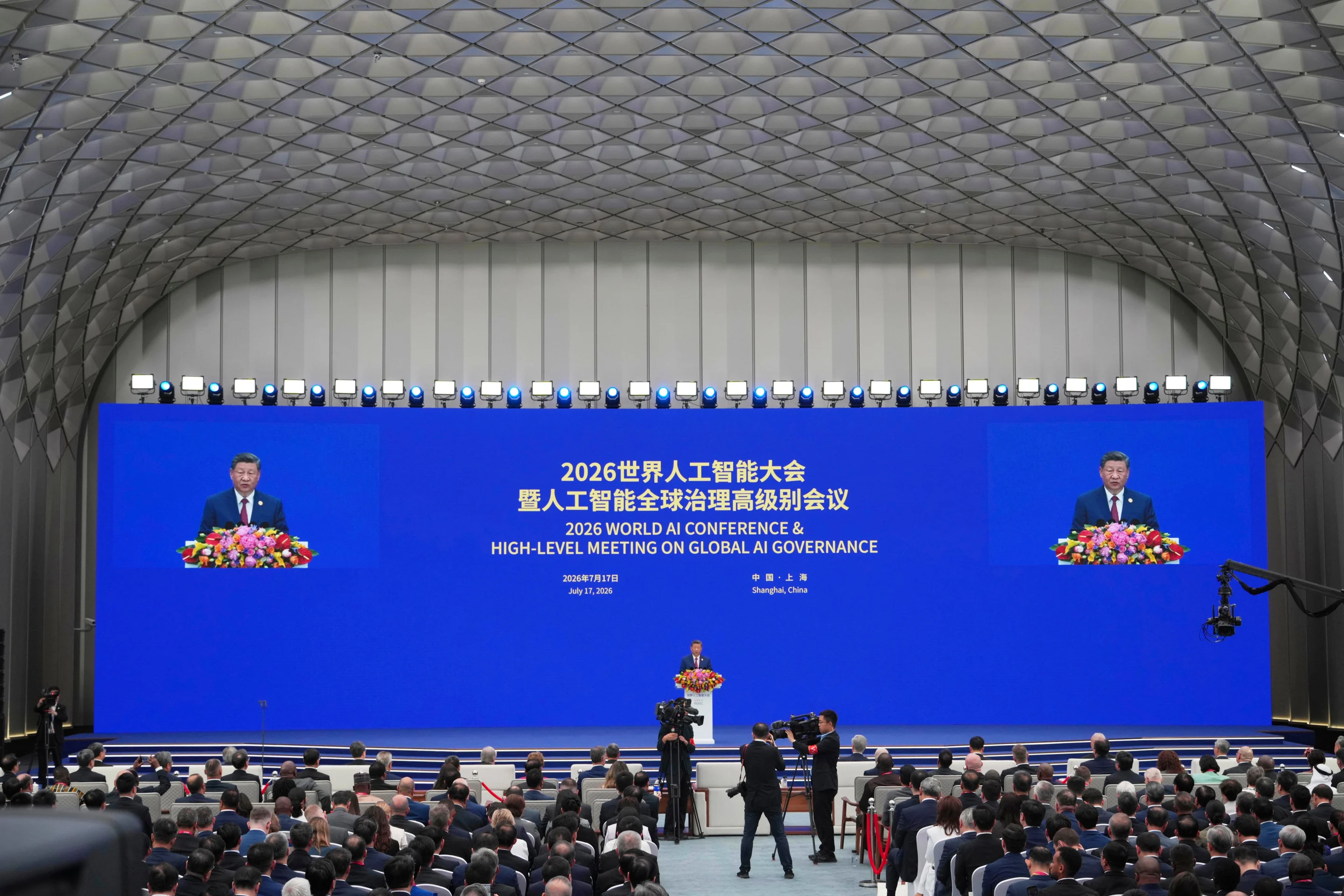
The global artificial intelligence race has entered a new phase as a newly unveiled Chinese AI model has caught the attention of the US technology industry with capabilities comparable to leading AI systems such as OpenAI's ChatGPT and Anthropic's Claude. Industry experts say the model demonstrates advanced reasoning, coding, multilingual understanding, and problem-solving abilities that place it among the world's most competitive large language models. The development highlights China's continued investment in AI innovation despite export restrictions on advanced chips and ongoing geopolitical tensions with the United States. The announcement has sparked discussions across the technology sector about the future balance of AI leadership, the rapid pace of model development, and the growing competition between American and Chinese technology companies. As businesses increasingly integrate AI into products and services, breakthroughs from both countries are expected to reshape global innovation, enterprise software, cloud computing, and digital infrastructure.
Chinese AI Demonstrates Performance Comparable to Leading Models
The emergence of China's latest artificial intelligence model represents one of the most significant developments in the global AI industry this year. Researchers and industry analysts who evaluated the model noted that it performs strongly across multiple benchmarks, including reasoning, software development, mathematics, document analysis, and multilingual communication. These are areas traditionally dominated by frontier AI systems developed by American companies such as OpenAI and Anthropic. The new model reportedly demonstrates an ability to understand complex instructions, generate accurate programming code, summarize lengthy documents, answer technical questions, and engage in detailed conversations with users. Such capabilities have surprised many industry observers who expected US companies to maintain a larger technological advantage in advanced AI systems.
The model's arrival reflects years of substantial investment by Chinese technology firms in machine learning research, semiconductor optimization, and large-scale computing infrastructure. Despite restrictions on access to some advanced AI chips, Chinese developers have continued improving model architectures, training techniques, and efficiency. Rather than relying solely on larger computing resources, many research teams have focused on optimizing algorithms, reducing training costs, and improving inference efficiency. This strategy has enabled them to build increasingly capable models while working within hardware limitations.
The announcement has also drawn attention because it demonstrates how quickly AI technology continues to evolve. Only a few years ago, leading conversational AI models were primarily developed by US companies. Today, competition has expanded globally, with organizations from China, Europe, and other regions introducing increasingly sophisticated systems capable of handling complex professional tasks. The rapid improvement of these models suggests that future competition will depend not only on computing power but also on innovation in architecture, training methods, data quality, and practical deployment.
Technology analysts believe the new Chinese model could encourage faster innovation across the AI industry. Increased competition often accelerates research, lowers costs, and pushes companies to improve performance more rapidly. Businesses adopting artificial intelligence may ultimately benefit from a broader selection of high-quality models designed for different languages, industries, and enterprise requirements. While benchmark performance alone does not determine commercial success, the model's strong capabilities indicate that China's AI ecosystem is becoming increasingly competitive on the global stage.
Growing Competition Intensifies the Global AI Race
The introduction of another frontier-level AI model underscores how rapidly the international race for artificial intelligence leadership is accelerating. Over the past several years, AI has become one of the most strategically important technologies for governments and businesses alike. Companies are investing billions of dollars in research, data centers, semiconductor infrastructure, and cloud computing to develop increasingly capable large language models. As AI becomes more integrated into productivity software, healthcare, finance, education, manufacturing, and scientific research, leadership in this field carries significant economic and technological advantages.
American companies such as OpenAI, Anthropic, Google, Microsoft, and Meta have led many of the industry's biggest breakthroughs, introducing increasingly advanced conversational AI systems that power enterprise applications and consumer services. At the same time, Chinese technology firms have accelerated development through substantial investments in domestic AI research, supported by government initiatives promoting technological independence. This growing competition has created an environment where innovation cycles are becoming shorter, with new models frequently surpassing previous generations in reasoning ability, coding performance, and multilingual understanding.
The competitive landscape has also expanded beyond model performance alone. Companies now compete on deployment costs, inference efficiency, enterprise security, customization, and ecosystem integration. Businesses increasingly evaluate AI platforms based not only on benchmark scores but also on reliability, scalability, regulatory compliance, and compatibility with existing software infrastructure. This means success depends on delivering practical value rather than simply achieving higher benchmark rankings.
Geopolitical factors continue influencing AI development as well. Export controls on advanced semiconductors, national security concerns, and technology regulations have encouraged countries to invest more heavily in domestic AI capabilities. As a result, governments increasingly view artificial intelligence as both an economic driver and a strategic technology essential for future competitiveness. This has accelerated funding for research institutions, cloud infrastructure, semiconductor manufacturing, and AI talent development around the world.
Industry experts believe competition between American and Chinese AI developers will continue driving rapid technological progress while encouraging companies to deliver faster, more capable, and more efficient AI systems for businesses and consumers.
What the Breakthrough Means for Businesses and AI Users
The arrival of another highly capable AI model has significant implications for businesses, developers, and everyday users adopting artificial intelligence technologies. Organizations increasingly depend on AI to automate customer support, generate software code, analyze documents, produce marketing content, assist with research, and improve workplace productivity. As more advanced models become available, businesses gain greater flexibility when selecting AI platforms that best meet their operational needs.
Greater competition among AI developers is also expected to reduce costs while improving model quality. Cloud providers and enterprise customers benefit when multiple companies offer comparable performance because competition encourages lower pricing, better customer support, and continuous feature improvements. Organizations may increasingly adopt multi-model strategies, selecting different AI systems for specialized workloads such as coding, reasoning, multilingual communication, legal analysis, healthcare documentation, or financial research.
Developers also benefit from a more competitive AI ecosystem. Open APIs, improved documentation, faster inference speeds, and lower operational costs make it easier to integrate advanced language models into software applications. Startups and enterprises alike can build AI-powered services without relying exclusively on a single provider, encouraging innovation across industries. As foundation models continue improving, businesses can devote more resources to creating specialized applications rather than building underlying AI infrastructure from scratch.
However, rapid AI advancement also raises important considerations regarding safety, transparency, privacy, and responsible deployment. Governments and regulators continue working to establish standards governing AI systems, particularly in areas involving misinformation, cybersecurity, copyright, bias, and data protection. Companies developing advanced models are expected to invest heavily in alignment research, content safeguards, and security testing to ensure reliable deployment across sensitive industries.
Despite these challenges, analysts broadly agree that increasing global competition is accelerating the pace of AI innovation. Rather than slowing development, the emergence of additional frontier models expands the ecosystem and provides businesses with more powerful tools capable of transforming productivity, research, education, and enterprise operations. The coming years are expected to see continued breakthroughs as AI companies compete to deliver faster, more intelligent, and more efficient systems for a rapidly expanding global market.
China's latest AI model demonstrates how quickly the global artificial intelligence landscape is evolving. By delivering capabilities comparable to ChatGPT and Claude, it has intensified competition within the technology industry and reinforced AI's importance as a strategic technology. As innovation accelerates worldwide, businesses and consumers are likely to benefit from increasingly powerful, efficient, and accessible AI systems, while competition between leading developers continues to shape the future of artificial intelligence.