


Subscribe

menu icon

Magazine Gazette | News That Shapes Our World Today

menu icon
×

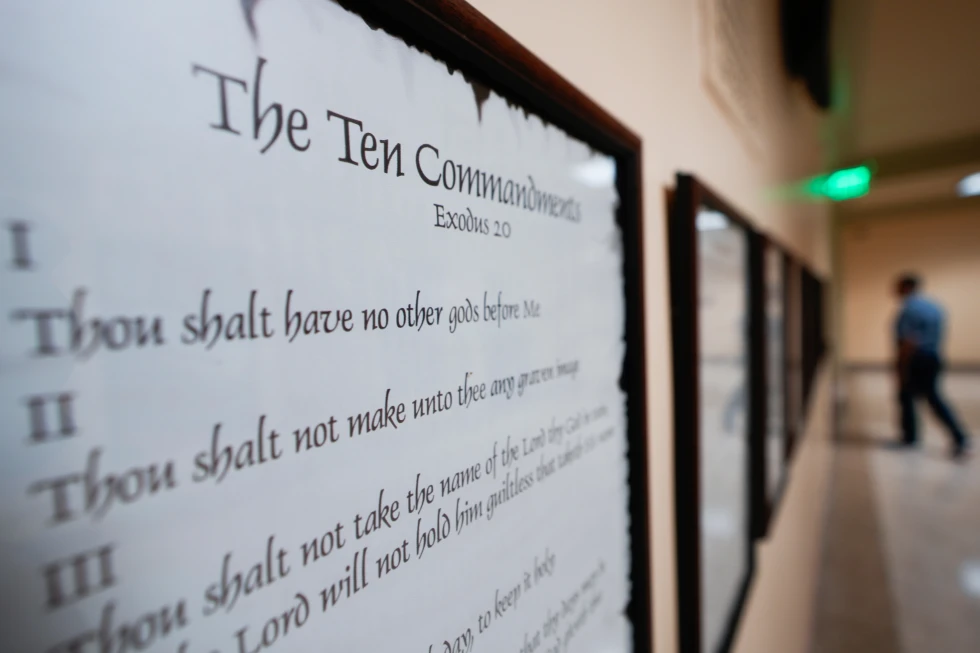
A Louisiana legislation mandating that the Ten Commandments be shown in public school classrooms as poster-sized displays has been approved by a U.S. appeals court. A lower court first blocked the law in 2024, but the 5th U.S. Circuit Court of Appeals voted 12–6 to lift the stay. The court stated in its conclusion, which was made public on Friday, that it was too soon to declare the statute unconstitutional. According to the majority judgment, this is partially because it is still unclear how prominently schools may display the religious text, if teachers would mention the Ten Commandments in class, or whether other writings, such as the Declaration of Independence or the Mayflower Compact, will also be shown. The panel determined that it lacked sufficient evidence to consider any potential First Amendment problems with the law in the absence of those kinds of specifics. The majority stated in the conclusion that there are insufficient data to "permit judicial judgment rather than speculation."

Daniel Rowen

The court also questioned whether other historical documents, such as the Declaration of Independence or Mayflower Compact, might be displayed alongside the religious text. The majority concluded there was not enough evidence to determine whether the law violates the First Amendment, stating that a legal judgment cannot be based on speculation. The decision allows the law to move forward for now, but legal challenges and constitutional debates are expected to continue.

  • A U.S. appeals court has approved a Louisiana law requiring the Ten Commandments to be displayed as poster-sized exhibits in public school classrooms.
  • The ruling came from the United States Court of Appeals for the Fifth Circuit, which voted 12–6 to lift a previous block imposed by a lower court in 2024.
  • The lower court had initially stopped the law over concerns it might violate constitutional protections regarding religion in public schools.
  • The appeals court said it was too early to declare the law unconstitutional because key details about how the displays will be used remain unclear.
  • Judges noted uncertainty about how prominently the Ten Commandments would be displayed and whether teachers would reference them during classroom instruction.

Supreme Court of the United States,

The ruling represents a significant legal victory for Louisiana state officials who argue the Ten Commandments have historical and educational value, not solely religious significance. Supporters of the law claim the displays are intended to highlight the influence of religious principles on American legal and cultural traditions. Opponents, including civil liberties groups, argue the mandate could violate the First Amendment’s Establishment Clause, which prohibits government endorsement of religion.

The appeals court emphasized that its decision does not permanently settle the law’s constitutionality but allows it to proceed while more factual details emerge. The court noted that how schools implement the requirement—including display size, placement, and educational context—could be critical in determining whether the law is constitutional. Legal experts say the case could eventually reach the Supreme Court of the United States, given its national implications for religion in public education. The decision could influence similar legislative efforts in other conservative-led states considering laws involving religious or historical displays in classrooms.

Steven T Stone

Reporter

Steven T. Stone is a seasoned journalist who reports on politics, business, and the economy, known for his clear explanations of complex policy issues and market developments.

U.S. Markets

Markets Rally on Government-Funding Breakthrough

December 01, 2025

U.S. Markets

Trade Deal Optimism Spurs U.S. Stock Surge

December 01, 2025

Member discussion

0 comments

Start the conversation

Become a member of Magazine Gazette to start commenting.