


Subscribe

menu icon

Magazine Gazette | News That Shapes Our World Today

menu icon
×

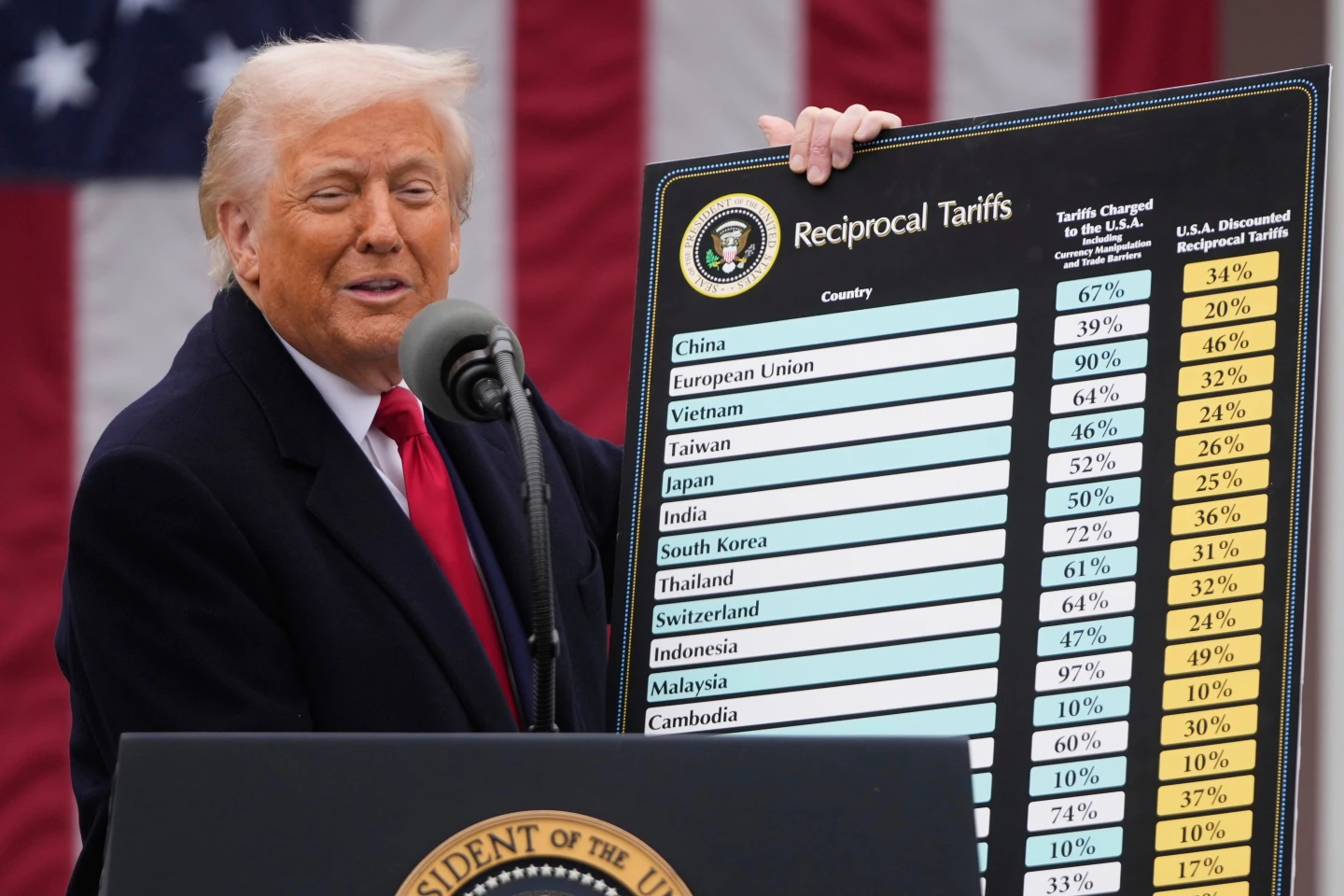
WASHINGTON (AP) — Looking back on the first year of his second term, President Donald Trump boasts that he has resurrected the American economy by imposing big import taxes on foreign products. He made his case in a recent opinion piece in The Wall Street Journal, chiding the paper and critics, including mainstream economists, who predicted that tariffs would backfire, raising prices and threatening growth. “Instead,’' he wrote, “they have created an American economic miracle.” But the proof he offers is often off-base or wrong altogether.Here’s a look at the facts around Trump’s assessment of tariffs.CLAIM: “Just over one year ago, we were a ‘DEAD’ country. Now, we are the ‘HOTTEST” country anywhere in the world!THE FACTS: This is a standard statement from Trump. But the U.S. economy was hardly “dead’’ when Trump returned to office last year. And in Trump’s second term, it’s performed strongly — after getting off to a bumpy start.

Derek Mallory

The numbers for all of 2025 aren’t out yet. But during the first three quarters of the year, Trump’s tariffs — or the threat of them — delivered mixed results for the American economy. From January to March, U.S. GDP actually shrank for the first time in three years. The main culprit was easy to identify: a surge in imports, which are subtracted from GDP, as American companies rushed to buy foreign products before Trump could impose tariffs on them.But growth rebounded in the second half of the year. From April through June, the economy expanded at a healthy 3.8% pace. And from July through September, it grew even faster — 4.4%. A big part of the surge was a drop in imports, likely reflecting Trump’s tariffs as well as the fact that importers had already stocked up at the start of the year. Strong consumer spending also drove economic growth.

  • U.S. GDP shrank for the first time in three years during Q1 2025. The primary cause was a surge in imports as American companies rushed to purchase foreign products ahead of anticipated Trump tariffs, which negatively impacted GDP calculations.k
  • The economy rebounded with healthy 3.8% growth in Q2. This recovery was partly driven by a drop in imports, reflecting both the impact of implemented tariffs and the fact that importers had already stockpiled goods in the first quarter.
  • Economic expansion accelerated to 4.4% in Q3, outpacing the previous quarter. The continued decline in imports and robust consumer spending were the main drivers of this strong performance.
  • Trump's tariffs and threats of tariffs delivered inconsistent outcomes across the first three quarters of 2025, with initial contraction followed by strong rebounds, demonstrating the complex economic impact of trade policy.
  • Despite tariff uncertainties and trade tensions, strong consumer spending remained a crucial pillar supporting economic growth throughout the latter half of 2025, helping to offset import-related volatility.

Trump also likes point to solid gains in the U.S. stock market. He noted that stocks hit new highs 52 times in 2025. It’s true that the American stock market did well last year. But it underperformed many foreign stock markets. The benchmark S&P 500 index climbed 17% — a nice gain but short of a 71% surge in South Korea, 29% in Hong Kong, 26% in Japan, 22% in Germany and 21% in the United Kingdom.

_ CLAIM: “Annual core inflation for the past three months has dropped to just 1.4% — far lower than almost anyone, other than me, had predicted.” THE FACTS: The president is using cherry-picked data to vastly exaggerate where inflation stands. His figure for annual inflation in the past three months -- which excludes the volatile food and energy prices -- is low, but reflects data distorted by the government shutdown in October and November, which disrupted the government’s data collection and forced the agency that compiles the figures to plug in rough estimates in some categories that artificially lowered overall inflation.

Annual core inflation for the final six months of 2025 is higher at 2.6%. That is down from January 2025’s level but about where it was in October 2024. Overall, inflation has leveled off this year, and was 3% in September before the government shutdown, the same as it had been in January 2025.It’s true that inflation hasn’t been as high as many economists worried it would be when Trump started rolling out tariffs last spring, but that is partly because many of the “Liberation Day” tariffs were withdrawn, reduced or riddled with exemptions. When Democrats won some high-profile elections last year by highlighting “affordability” concerns, the administration rolled back existing or planned tariffs on coffee, beef and kitchen cabinets, for example, a backhanded acknowledgment that the duties were raising prices.The impact of tariffs can be more clearly seen in core goods prices, which also exclude food and energy. Before the pandemic, core goods costs typically barely rose — or even fell — each year, but last December they were 1.4% higher than a year earlier. That was the largest increase, outside the pandemic, since 2011.

Steven T Stone

Reporter

Steven T. Stone is a seasoned journalist who reports on politics, business, and the economy, known for his clear explanations of complex policy issues and market developments.

politics

Senate Deal Marks Turning Point in Historic Shutdown

December 01, 2025

politics

Power Shift Looms as Pelosi Announces Retirement

December 01, 2025

Member discussion

0 comments

Start the conversation

Become a member of Magazine Gazette to start commenting.